📁 Archived Record
Content preserved from the original coinsconf.com/2025 site ahead of its retirement. The original site (while still online) can be found at https://coinsconf.com/2025.
International Conference on Omni-layer Intelligent Systems
The 7th IEEE International Conference on Omni-Layer Intelligent Systems was hosted at the Pyle Center, University of Wisconsin–Madison, bringing together experts in Digital Transformation — from AI and IoT to Cloud, Blockchain, Cybersecurity, and Robotics — with a multi-disciplinary program of technical research papers, panels, workshops, and tutorials on the latest developments across the IoT & AI ecosystem.
Venue
Pyle Center, University of Wisconsin–Madison
702 Langdon St, 53706
Madison, United States
Organizing Committee
General Chairs

Prof. Umit Yusuf Ogras
Gene Amdahl Professor, University of Wisconsin-Madison
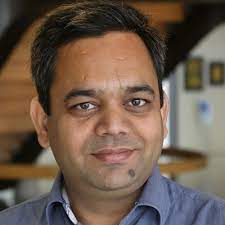
Prof. Amit Singh
University of Essex
Program Chairs

Prof. Fatemeh Afghah
Clemson University

Prof. Priya Panda
Yale University
Publication Chairs: Prof. Florenc Demrozi (University of Stavanger, Norway) & Prof. Kexin Li (Arizona State University)
Registration Chairs: Prof. Setareh Behroozi (University of Wisconsin-Madison) & Prof. Federica Zonzini (University of Bologna)
Workshop and Special Session Chairs: Ganapati Bhat (Washington State University) & Arman Roohi (University of Illinois Chicago)
Publicity Chairs: Aly Sabri Abdalla (Mississippi State University), Nicola Dall' Ora (University of Verona, Italy), Jaehyun Park (Ulsan University), Jaeha Kung (Korea University), Sumit K Mandal (IISC Bangalore), Oktay Cetinkaya (University of Newcastle) & Aritra Ray (Microsoft)
Treasurer: Prof. Kun-Chih Chen (National Yang Ming Chiao Tung University, Taiwan)
Local Chair: Prof. Tsung-Wei Huang (University of Wisconsin-Madison)
Women in Engineering Chairs: Prof. Bahar Farahani (Cyberspace Research Institute) & Prof. Peipei Zhou (Brown University)
International Liaison Chair: Prof. Leila Ismail (United Arab Emirates University)
Track Chairs
Digital Healthcare and Well-being: Luigi Borzì (Politecnico di Torino) & Behnaz Ghoraani (Florida Atlantic University)
Circuit and System Design for AIoT: Kun-Chih Chen (National Yang Ming Chiao Tung University) & Amit Trivedi (University of Illinois Chicago)
Sensing Devices and Systems for AIoT: Florenc Demrozi (University of Stavanger) & Eyuphan Bulut (Virginia Commonwealth University)
Internet of Things (IoT): Minxian Xu (Shenzhen Institutes of Advanced Technology, CAS) & Maryam Parsa (George Mason University)
Tiny ML and Embedded AI: Sathwika Bavikadi (Rochester Institute of Technology) & Caiwen Ding (University of Minnesota)
Low Power Design and Automation: Peipei Zhou (Brown University) & Jeff Zhang (Arizona State University)
Security & Privacy: Francesco Regazzoni (University of Amsterdam) & Aydin Aysu (North Carolina State University)
Communications and Networking for AIoT: Tolunay Seyfi (Clemson University) & Mehdi Sookhak (Texas A&M University)
Intelligent Robots and Systems: Truong X. Nghiem (University of Central Florida) & Hongmei He (University of Salford)
Artificial Intelligence & Machine Learning: Deliang Fan (Arizona State University) & Souvik Kundu (Intel, USA)
Emerging Technologies on Intelligent Systems: Mian Ahmad Jan (Abdul Wali Khan University Mardan)
Generative AI: Systems, Architectures, and Applications: Bahar Farahani (Cyberspace Institute)
Industry 4.0 and Smart Manufacturing: Gerhard Hancke (City University of Hong Kong) & Gabor Sziebig (SINTEF Manufacturing)
Smart Infrastructure: Marcin Plociennik (EOSC) & Ioanna Roussaki (National Technical University of Athens)
Steering Committee
KC
Krishnendu Chakrabarty
Arizona State University
Co-Founder & Steering Committee Co-Chair
FF
Farshad Firouzi
Duke University | Arizona State University
Co-Founder & Steering Committee Co-Chair
JM
Jan M. Rabaey
UC Berkeley
DZ
David Z. Pan
University of Texas at Austin
MS
Majid Sarrafzadeh
UCLA
MD
Mahmoud Daneshmand
Stevens Institute of Technology
HW
Honggang Wang
University of Massachusetts Dartmouth
BF
Bahar Farahani
Cyberspace Institute
Keynote Speakers
Energy Efficient Generative AI from Cloud to Edge
Addressed the gap between ML model accuracy and actual energy efficiency, latency, and battery lifetime, discussing platform-specific power models and hardware-aware design for efficient transformer and diffusion models across modalities.
Moore's Law in the AI era
Explored Moore's Law's impact on technological breakthroughs and its role in today's AI landscape, addressing workforce development challenges and environmental impacts affecting future AI progress.
Chips Act & Systems of Support for US Semiconductor Ecosystem
Detailed NSTC's implementation of the US CHIPS and Science Act, focusing on design enablement, silicon aggregation, and wraparound support for semiconductor research and startups.
Meeting the Spectrum Needs of Next Generation Wireless Systems
Analyzed spectrum allocation trade-offs for the 3 GHz and 7-8 GHz bands using game-theoretic models to evaluate the impact on commercial wireless services.
Topics
Internet of Things (IoT): From Edge to Cloud
Circuit and System Design for AIoT
Communications and Networking for AIoT
Data-centric Engineering
Artificial Intelligence & Machine Learning
Distributed Ledger Technologies & Blockchain
Security & Privacy
Low Power Design and Automation
Intelligent Robots and Systems
Sensing Devices and Systems for AIoT
Smart City
Smart Mobility, Transportation, and Logistics
Industry 4.0 and Smart Manufacturing
Energy and Smart Grids
Digital Healthcare and Well-being
Smart Agriculture
Cyber-physical Systems
Emerging Technologies on Intelligent Systems
European Projects on Intelligent Systems
Unleashing the Intelligent Edge
TinyML, IoT, and Monitoring Environment (TIME)
Program
The program included four keynote lectures alongside technical paper sessions, workshops, special sessions, and a PhD Forum.
📄 Proceedings
Accepted papers (max. 6 pages, double-column, 10pt, with page charges beyond 6 up to an 8-page limit) were submitted to the IEEE Xplore Digital Library, copyright held by IEEE.
Sponsors